
The ground floor is where many assumptions begin
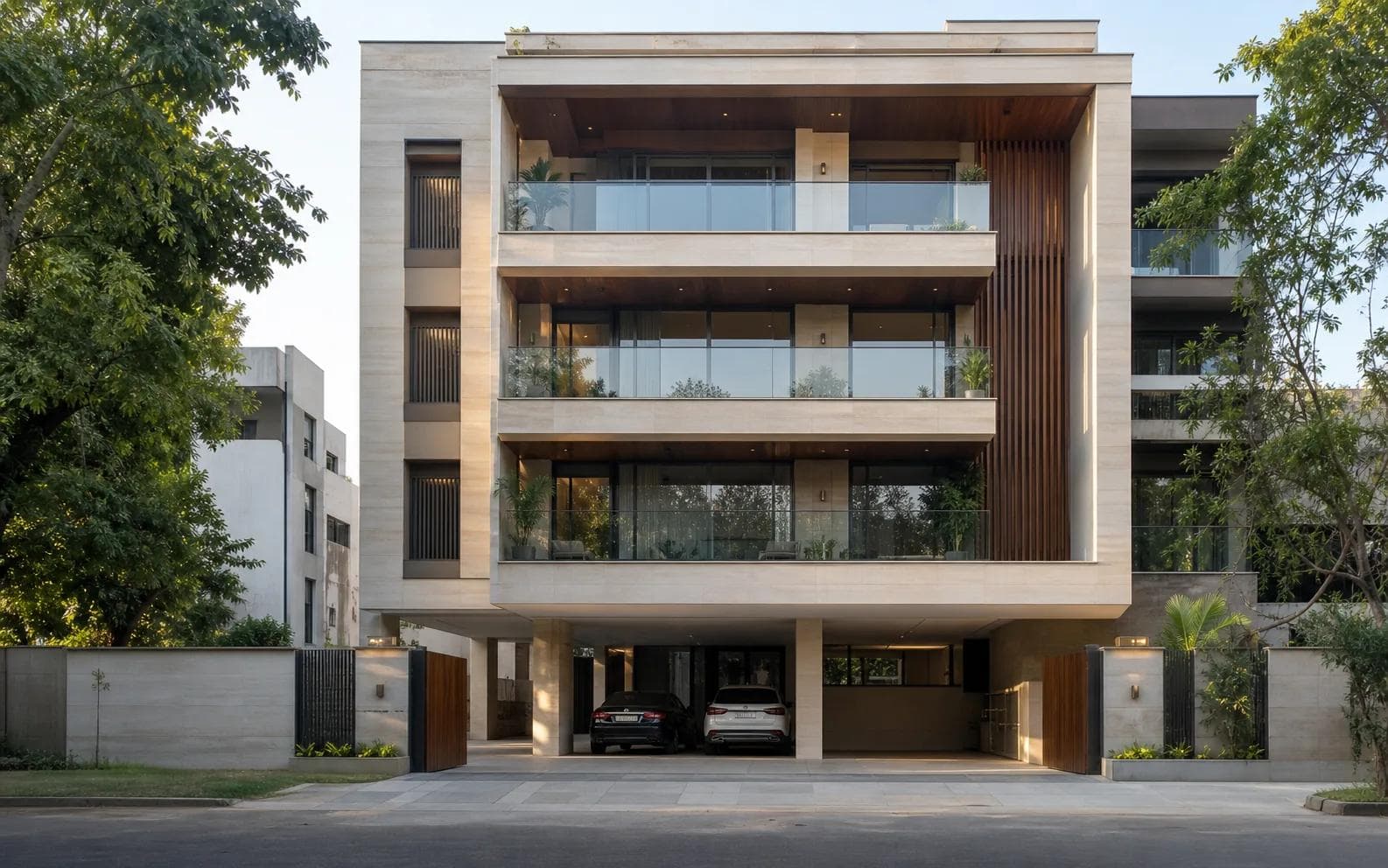
In South Delhi, a well-designed builder floor can look completely resolved from the street: a clean facade, controlled entry, a lift and cars parked at stilt level. That visual confidence can be useful, but it should never replace a document check. Before a buyer treats a stilt as a secure amenity, the building's sanctioned plan, parking allocation and completion status need to be understood together.
This is not a legal opinion. It is a practical buyer's checklist for asking clearer questions before token money, agreement drafting or a final booking decision. For transaction-specific advice, buyers should verify documents with a qualified property lawyer and the relevant authority.
Start with the sanctioned plan, not the sales promise
A sanctioned plan is the drawing approved by the competent authority for the plot and building. It is the first document that helps a buyer understand what was permitted: the number of levels, the intended use of the stilt area, setbacks, access and the broad building configuration. A brochure can explain the product; the sanctioned plan explains the approval basis.
Ask to see the relevant plan and compare it with the actual building. The purpose is not to become an architect at the site visit. It is to notice whether the promised layout, access and parking narrative are consistent with the building that exists today.
What stilt parking should mean to a buyer
Stilt parking usually refers to an open or partially open ground-level area supported by structural columns, with the residential floors above. In a premium builder floor, it can improve arrival, ventilation and everyday parking convenience. But the label alone does not tell a buyer which space is allotted to which floor, whether access is shared, or whether any part of the area has been altered after approval.
The practical question is simple: what exactly is being offered with this unit? Ask for the parking slot or arrangement to be described clearly in the agreement or sale documentation. If a buyer is being promised exclusive use, tandem parking, stack parking or a shared arrangement, that language should be specific rather than verbal.
Documents worth reading before the booking amount
The exact document list varies by transaction, but buyers commonly start with title and chain documents, the sanctioned plan, completion or occupancy documentation where applicable, the proposed agreement, tax and utility position, and the stated parking allocation. A qualified professional can tell you which approvals matter for the specific plot, construction stage and transaction structure.
The most useful habit is to compare the documents against the physical product before emotion takes over. Does the address match? Does the floor being sold match the agreement? Is the parking language precise? Are there shared areas whose use needs clarification? Clear answers early usually make the rest of the transaction calmer.
A better developer conversation
Good due diligence is not distrust. It is how a serious buyer protects the value of a serious purchase. A developer or seller who has planned the building carefully should be able to explain the parking arrangement, share the relevant document trail through the right process and put the important commercial terms in writing.
At Sky Skrabers, we believe the strongest property conversation is one where design, construction and documentation are discussed with the same seriousness. The building should feel good on the first visit and remain understandable when the documents are opened.
Legal & RERA
Legal Buildings and Stilt Parking: What South Delhi Buyers Should Verify Before Booking
3 checksSanctioned plan, completion or occupancy status, and parking allocation should tell the same story.
1 levelA stilt is a ground-level parking configuration, not an automatic clearance for any use or alteration.
before bookingAsk for the key approvals and the exact parking arrangement in writing before making a commitment.